
From a 3-second glance to an 18-second visit.
CaseLeap — a B2B testimonial video production company serving US marketing teams — was already attracting visitors, but the homepage was losing them within seconds. We used GA4 and Microsoft Clarity to identify where attention was being lost, then refined the message, surfaced proof earlier, clarified the CTA hierarchy, and reduced conversion friction.
- Client
- CaseLeap
- Traffic
- US organic and referral
- Platform
- Webflow
- Primary conversion
- Custom quote requests and strategy calls
- Scope
- Ongoing CRO & UX optimization across the homepage, campaign pages, service pages and pricing journey
- Longer average time on the homepage
- 6×
- Longer average time on the homepage3 seconds → 18 seconds
- More events per homepage visit
- +45%
- More events per homepage visit3.34 → 4.84
- Fewer quick backs
- −45%
- Fewer quick backs21.4% → 11.8%
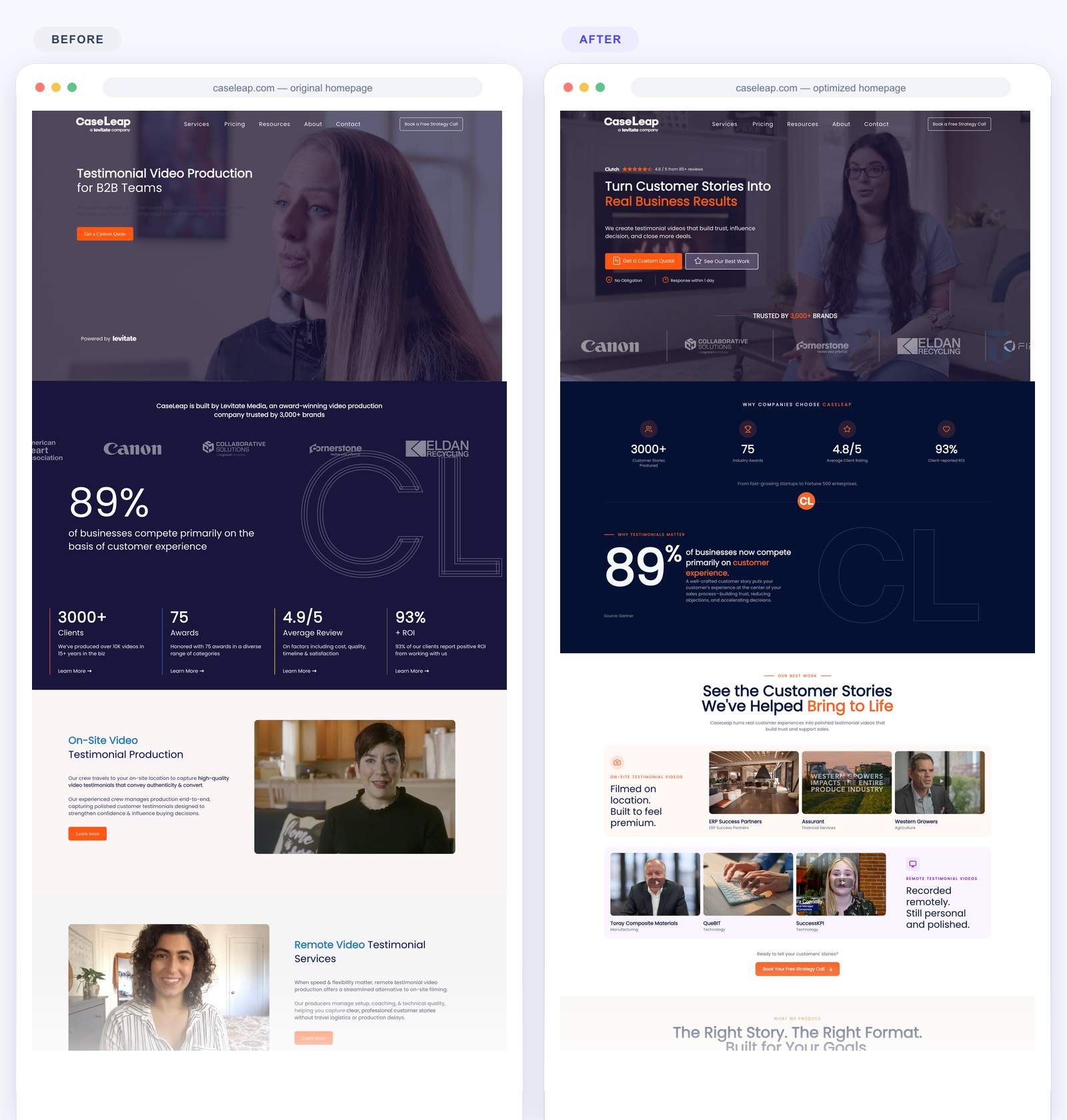
Good traffic was slipping away before the message could land.
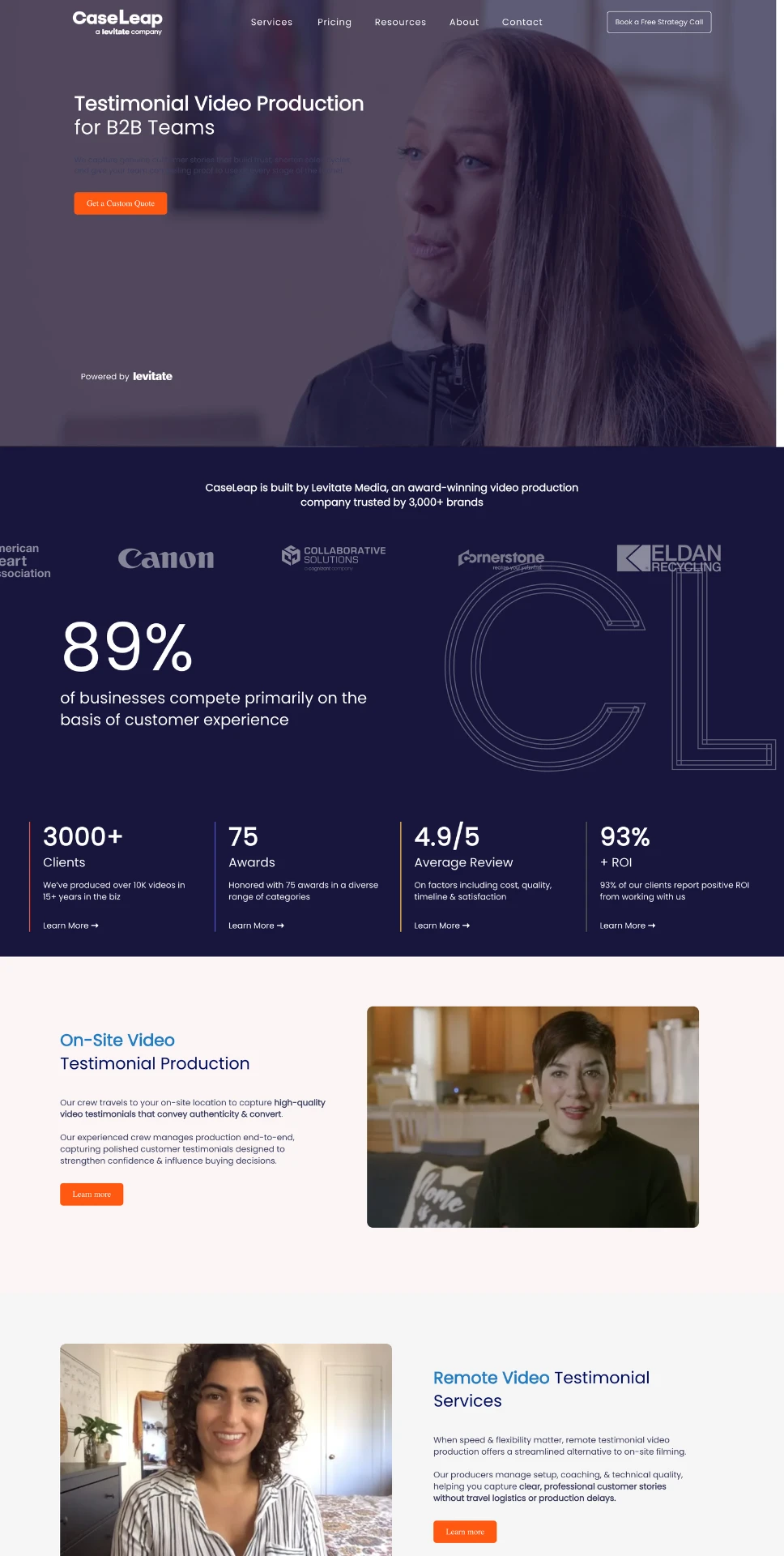
CaseLeap was already attracting the right visitors — US marketing teams looking for testimonial video production. But the homepage was losing them within seconds: the message, proof and next step weren't landing fast enough to hold attention.
Visitors left within seconds
Homepage visitors averaged 3 seconds before leaving — the message, proof and next step weren't landing fast enough.
Proof sat too low
Trust signals and testimonials were far below the fold, long after visitors had formed their first impression.
Competing calls to action
The primary CTA competed with equally weighted alternatives, splitting attention at the decision point.
Form friction
Forms added avoidable effort at the moment visitors were ready to act.
Mobile conversion friction
The mobile experience added extra friction at the decision point.
Let behavior data decide what changes first.
Rather than redesigning on instinct, every decision was grounded in what GA4 and Microsoft Clarity showed about real visitor behavior on the page.
- 1Use GA4 and Microsoft Clarity to find where the homepage loses attention.
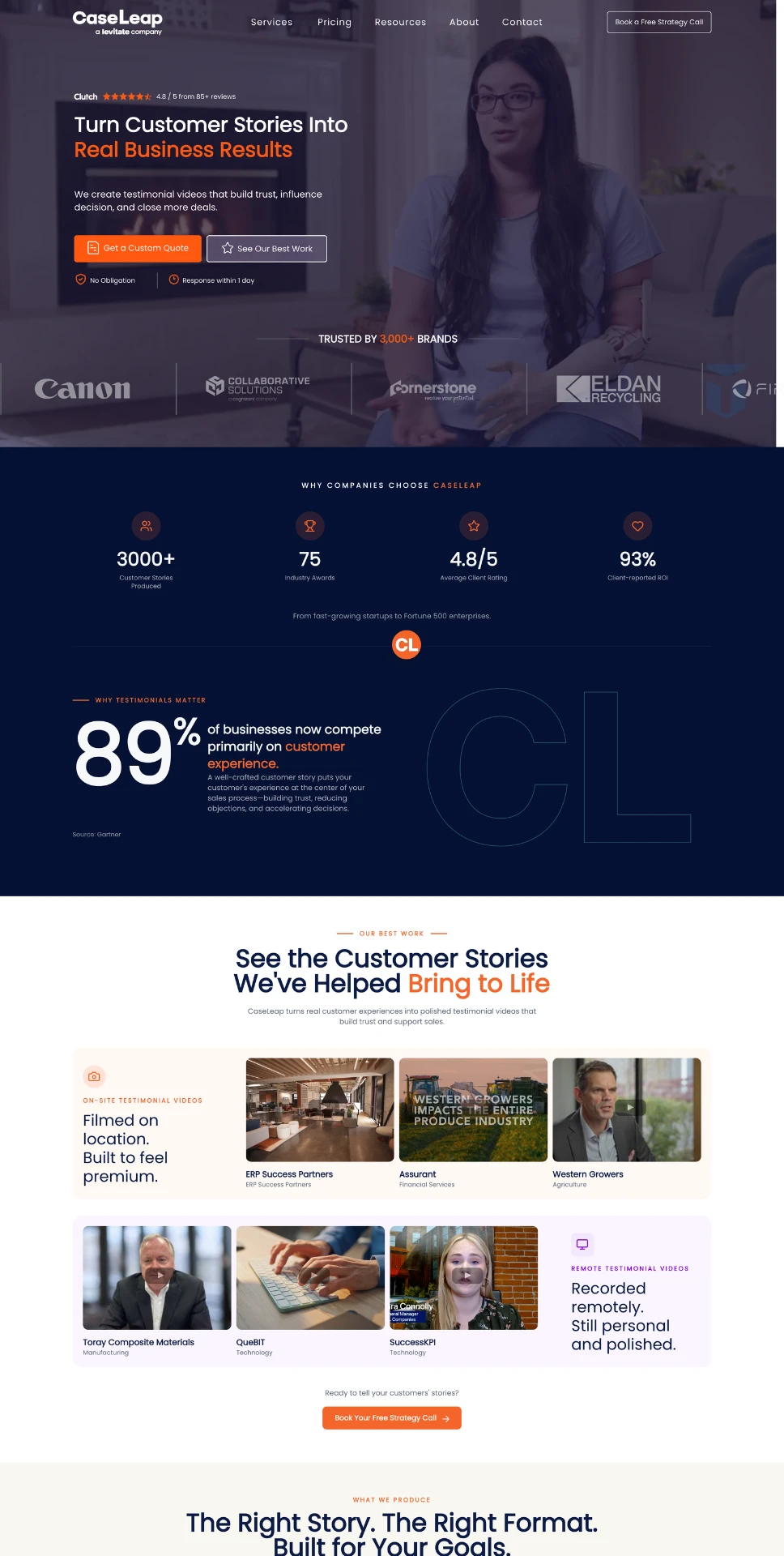
- 2Refine the message so the value is clear within the first few seconds.
- 3Surface proof earlier — closer to the headline and decision points.
- 4Clarify the CTA hierarchy so the primary action stands out.
- 5Reduce conversion friction in forms and the mobile experience.
- Homepage visitors averaged 3 seconds before leaving
- Trust proof and testimonials sat far below the fold
- The primary CTA competed with equally weighted alternatives
- Forms and mobile UX added friction at the decision point
- Outcome-led hero messaging built around business results
- Trust and testimonials moved closer to the decision point
- Clearer primary and secondary CTA paths
- Simpler forms and improved mobile conversion UX
Engagement moved decisively in the right direction.
In the measured period after Iteration 1, average time on the homepage rose from 3 seconds to 18 seconds, events per homepage visit rose from 3.34 to 4.84, and quick backs fell from 21.4% to 11.8% — measured across US traffic in GA4 and Microsoft Clarity.
The homepage now holds attention long enough for the proof, the message and the next step to do their job.
Results compare US traffic before and after Iteration 1, measured in GA4 and Microsoft Clarity. No controlled experiment was run; figures describe observed behavior during the measured period.
“Working with Rizvi has been a dream come true for our marketing department. Before working w/ him we were utilizing different contractors for site design, development, and CRO. Rizvi is a one-stop shop and consistently executes at a high level. To add, and this is really appreciated in a fast moving marketing department- his communication is excellent so we always know where things stand day to day. Planning to use him ongoing for a long time to come.”
Is your page losing visitors in the first few seconds?
Send us your page. We'll show you where attention drops — and what to change first.
Free · Personalized · No obligation